How Brands are experienced and remembered
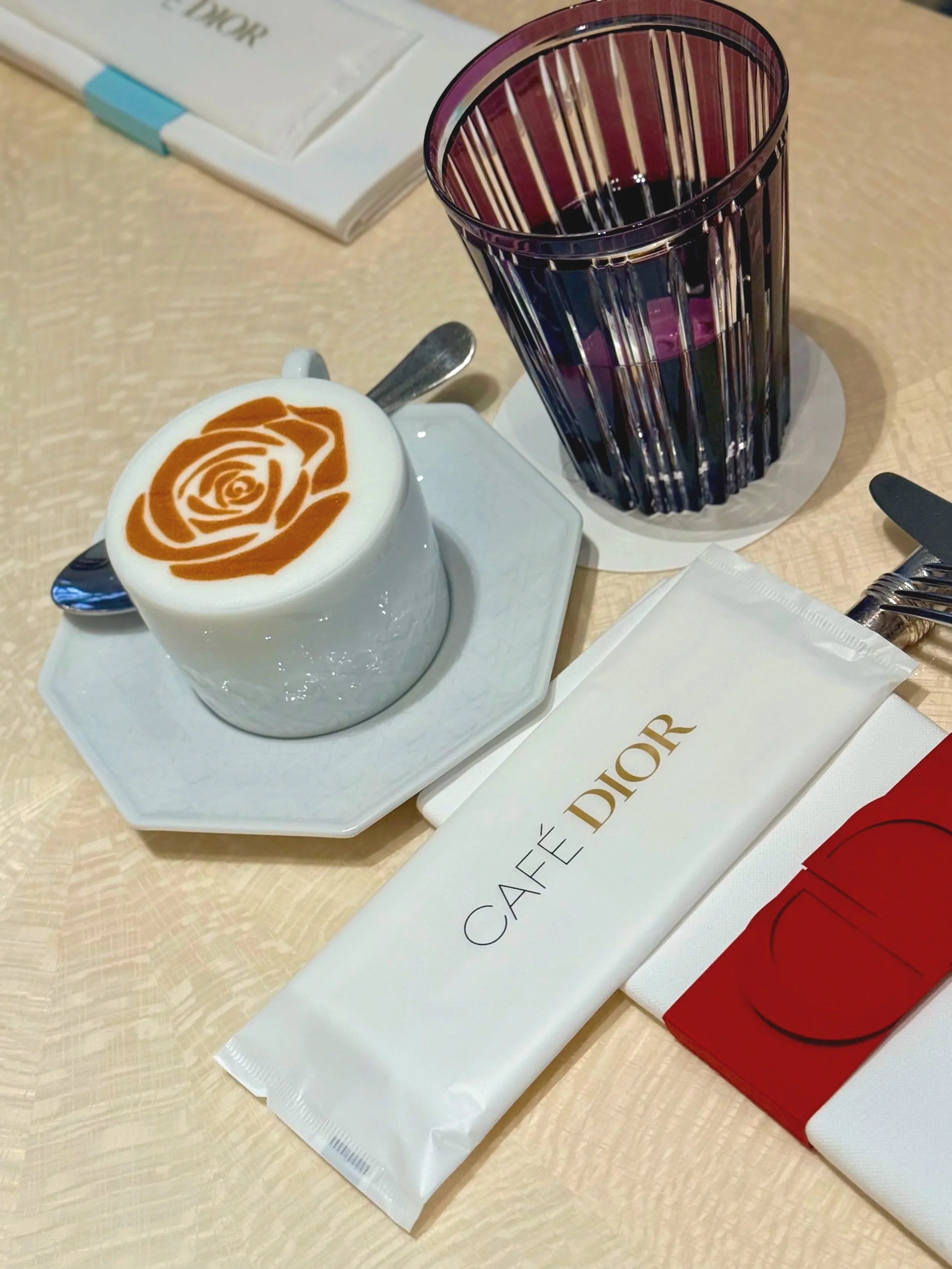
Café Dior by Anne-Sophie Pic at Kansai International Airport (KIX) in Osaka for pre-flight coffee and pastries. Taken December 2025.
A lot of contemporary businesses nowadays are focused on how they look. The unique logos, well paired typographies, colour palette, and visual systems. Don’t get me wrong, as someone who used to design visual identities, these things do matter. Now with the rise of AI and multiple design platforms like Canva, creating a logo can be done in an instant. I once talked about the idea of sameness. When we’re only exposed to media like Pinterest, which manufactures taste, logos that are used to differentiate are no longer enough. People do succumb to the sameness, and that’s the moment that brand recognition fails. What people remember is not what they see, it’s what they experience. A shift from visual to emotions.
Through Branded Experiences is where the brand becomes tangible.
While branding often lives in visuals, it’s through experience a brand becomes real. You see this clearly in retail. A space is not just designed to look good, it is designed to be moved through, felt, and remembered. The materials, the lighting, the way a room opens up, even the fragrance, these are not simply decorative decisions. They shape the visitor on how an environment should be experienced. And the same now applies to brands. There is a calling to move beyond identity into something encountered. Not just scrolled and seen through the screen. But lived.
Hospitality is where brands extend their universe.
Notice how many luxury houses entering hospitality? Bvlgari Hotels, Dior Cafes opening in key cities across the Globe? These are not just expansions, they are brand extensions. According to Kapferer (2011), through extensions brands are allowed to exist in different dimensions. Not only as products, but as environments. Through concepts like hotels, cafes, pop-ups, the brand is no longer observed. It is experienced. Everything becomes part of a larger narrative. This is what makes experiential design powerful. It becomes a tactile extension of the brand’s universe. This then deepens the existing relationship with the brand and their customers.
Experience becomes the new form of enrichment.
There is an ongoing shift in luxury. In this ever changing landscape, not everyone is looking for more material goods. What people begin to value instead is experience. This is the reason why travel is on an upward trend ever since the Pandemic concluded. Because people are moving from consumption to enrichment. Spaces that feel considered, moments that linger, and encounters that feel different from everyday. This is where experiential design becomes essential, it responds to this shift. It allows a brand to offer something beyond ownership, something that can’t be replicated, something that stays with an individual.
What does your business leave behind? Is it remembered more than how it looks? Do you allow your customers to live within your brand’s world? In this highly competitive and fast paced world, people don’t just advocate for what they recognise. They return to what they have experienced. That’s what turns a business into something more than just a brand. It becomes a world people want to step into.